What is it?
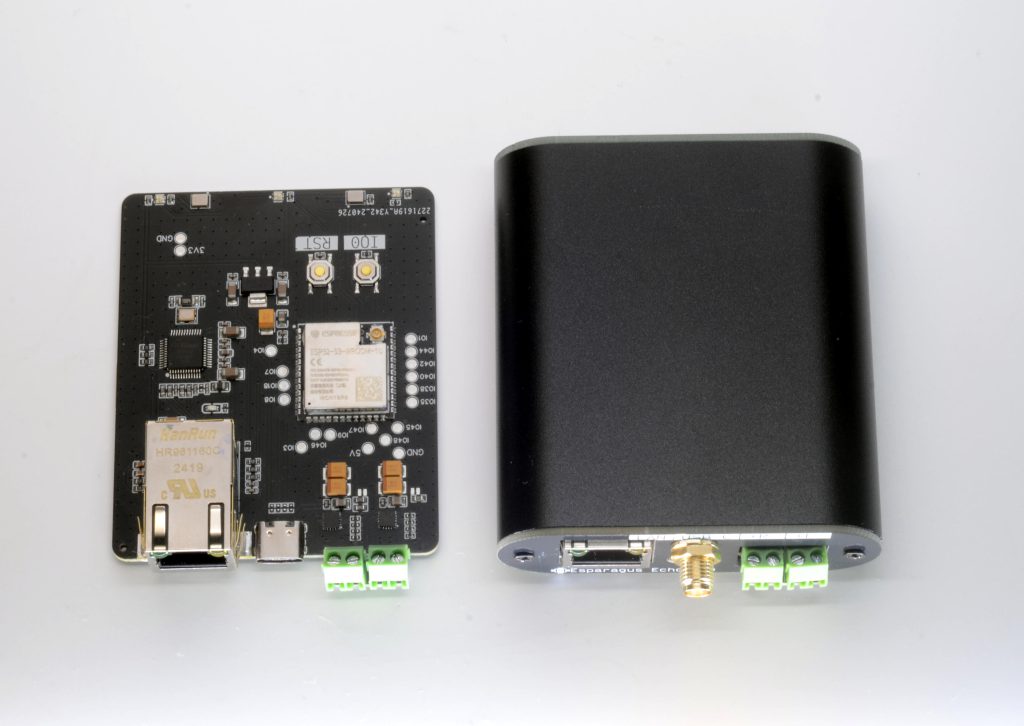
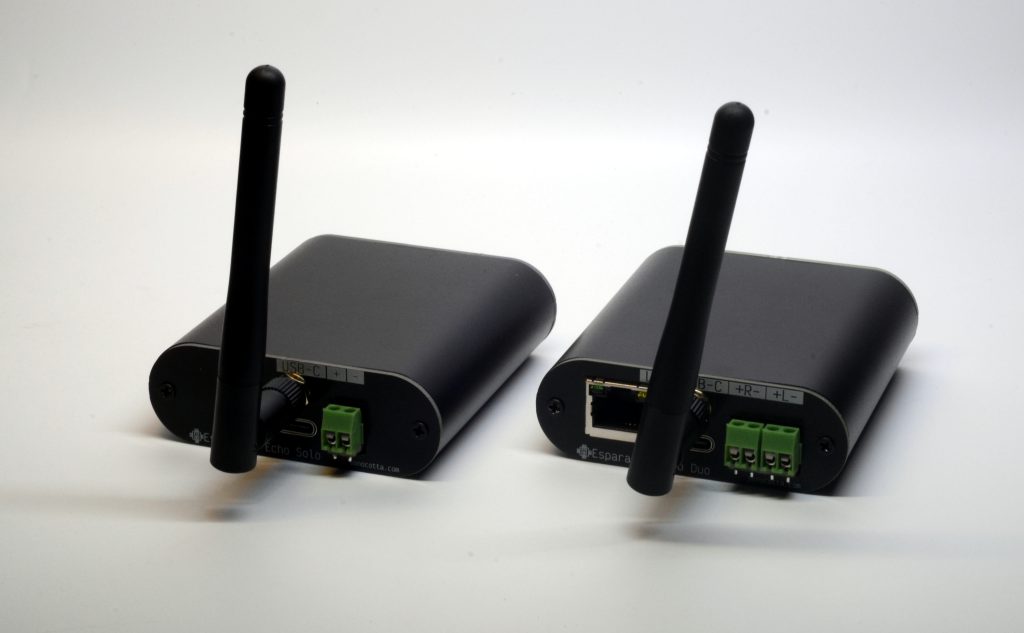
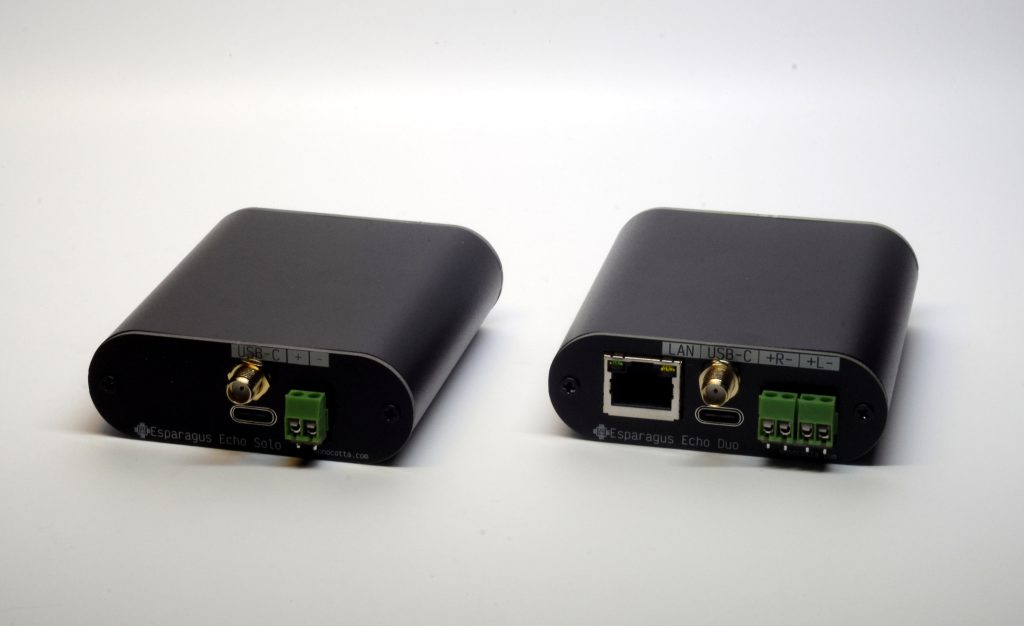
Esparagus Echo is a series of two ESP32-S3-based voice control edge devices. They are designed to work with ESPHome as an edge part of the voice control pipeline. Both devices are enclosed in a neat-looking aluminum case and expose feedback LEDs on the front panel, where it is easy to spot them, leaving power and speaker connectors on the backside.
Motivation
I’m a big fan of Alexa. I’m using it around the house, and my family is using it all the time, including my 2-year-old. However, I do not need to mention privacy concerns; these are quite common. My biggest pain point is the inability to integrate Alexa into the Home Assistant setup that I have at home. I’m a big fan of automation around the house and want to trigger complex flows based on the specific sensors and devices that I have. I think the freedom of the implementation is a bit like the magic of the Home Assistant. Why not have voice control, since everyone around the house is used to it already?
Esparagus Solo
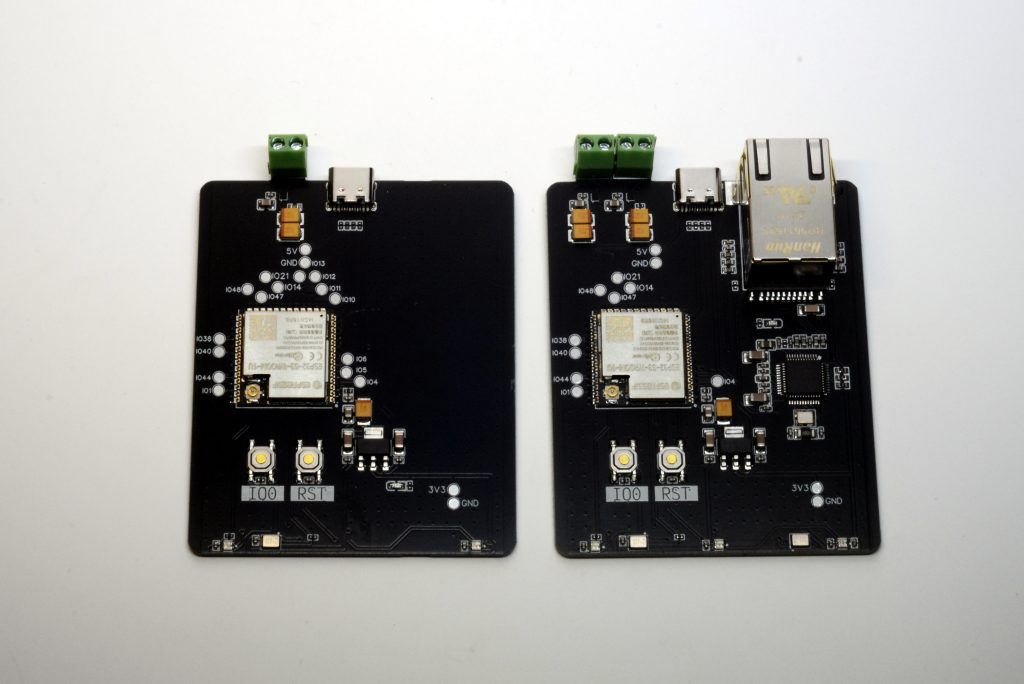
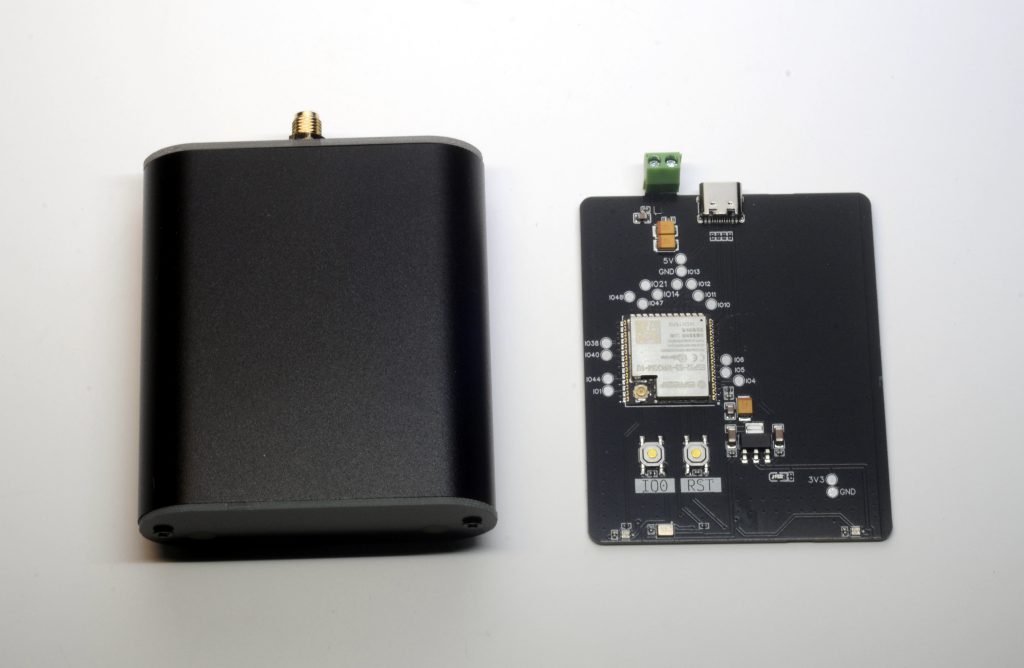
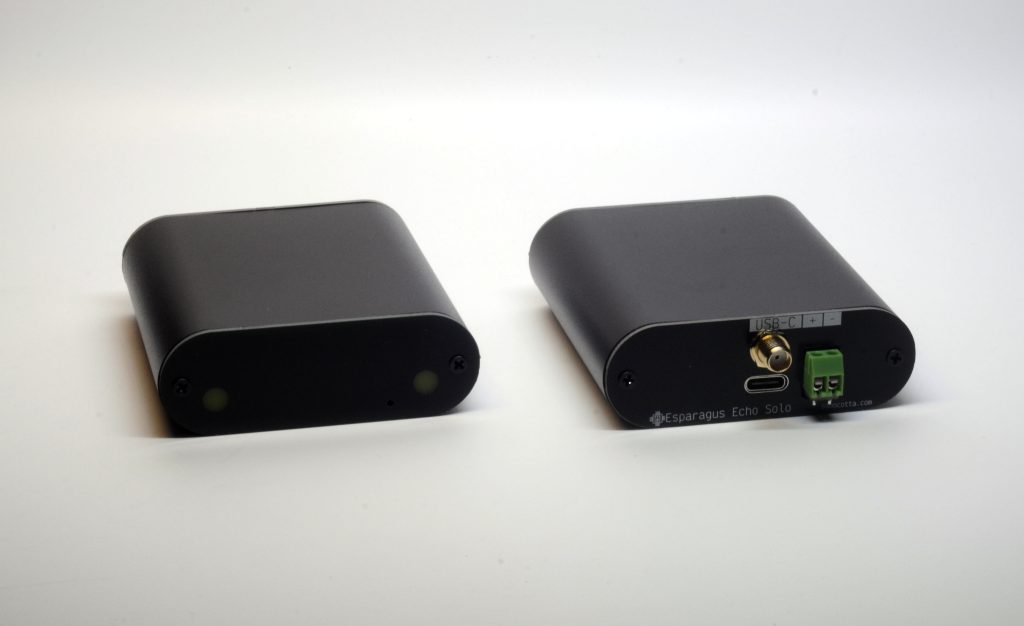
Esparagus Solo has all the basic necessities, a Mic on the front panel, a couple of feedback LEDs, and a speaker at the back. Onboard is a simple and well-known MAX98357 DAC with a reasonable 5W of output audio. It uses a built-in antenna for simplicity. And that’s pretty much it.
Esparagus Duo
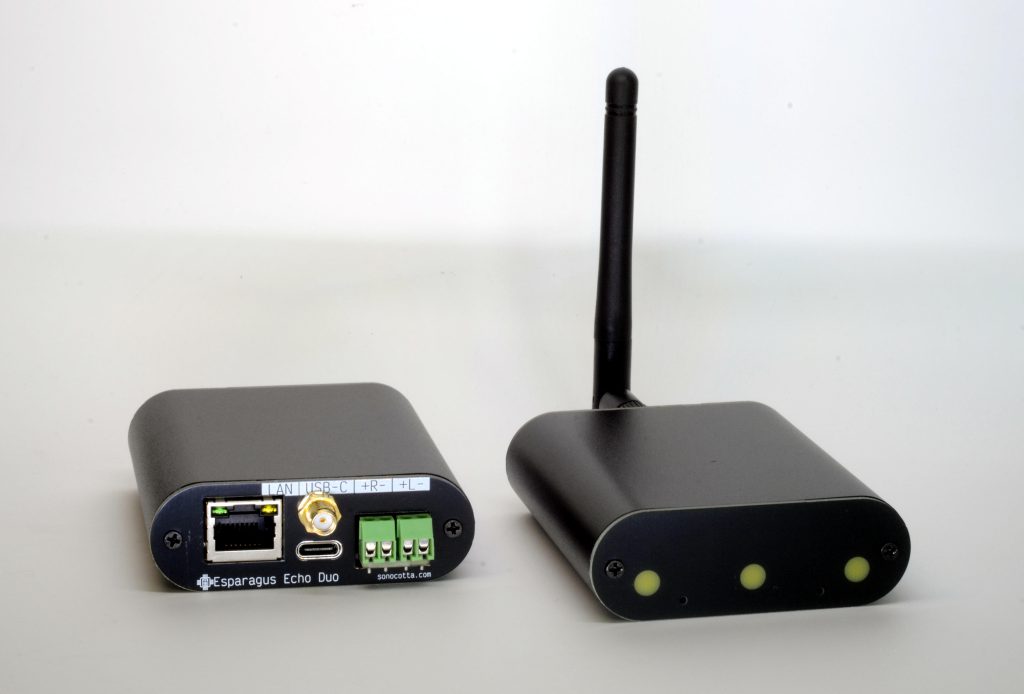
On top of Solo capabilities, Esparagus Duo uses a dual Mic setup, extra LED, and most importantly, 2-channel MAX98357 channels to deliver quality stereo audio (and thus can be used as a media player device). To make sure it would stream audio without a hiccup, it uses an external Wifi antenna (much-improved perception) and has SPI Ethernet for the most robust networking.
Features
| Esparagus Echo Solo | Esparagus Echo Duo | |
|---|---|---|
| MCU | ESP32-S3-WROOM-N8R8 | ESP32-S3-WROOM-N8R8 |
| DAC | Single I2S DAC (MAX98357) with built-in D-Class amp | Dual I2S DAC (MAX98357) with built-in D-Class amp |
| Output (4Ω) | 1x 5W | 2x 5W |
| Output (8Ω) | 1x 3W | 2x 3W |
| RGB LED | 2 | 3 |
| I2S Microphone | 1 x TDK InvenSense ICS-43434 | 2 x TDK InvenSense ICS-43434 |
| Flash/PSRAM | 16MB/8MB | 16MB/8MB |
| Connectivity | WiFi + BLE | WiFi + BLE + Ethernet |
| Case | 80 x 50 x 20 mm Aluminum case | 70 x 24 x 88 mm Aluminum case |
| Power requirement | 5V from USB-C | 5V from USB-C |
⚠️Echo boards will connect to passive speakers; you can’t use headphones or an external amp
💡Need to connect an external amp? Check out HiFi Esparagus, which now also has a microphone
💡Need something with a bit more power? Check out Louder Esparagus and Amped Esparagus
💡Looking for a more cost-efficient version? Check out Loud-ESP32
Onboard PSRAM
Audio streaming requires proper buffering to work, even with the ESP32’s 500K of RAM; it is a challenging task. For that reason, all Louder-ESP32 board versions have an 8 MB PSRAM chip onboard, connected via a high-speed interface.
Firmware
- Home Assistant
Start from the web-installer, as soon as you configure WiFi, the boards will be discovered by the ESPHome add-in automatically. Dedicated configs can be found in the documentation for simple and stable media-player, experimental sendspin protocol, and experimental snapclient component - Squeezelite-ESP32
Flash directly from your browser using the web-installer, configure WiFi using Hotspot (default password: squeezelite). Don’t forget to exit Recovery mode when configured. - Snapclient
Flash directly from your browser using the web-installer, as soon as you configure the WiFi board, it will discover the snapserver automatically - Snaplient (edge)
Developer’s version of the snapclient, less stable and more feature-rich for those who cannot wait for new features to be released. Installed via web-installer, similar to standard snapclient - Your own software
Use Arduino IDE or Platformio IDE and the provided software samples
Using with Home Assistant
Both HiFi Esparagus versions were created specifically to be used with Home Assistant via ESPHome integration. For both boards, rich configs were pre-created with hardware configuration for common use cases. These include
- media_player component for simple and robust media playback and TTS announcements (with ducking effect)
- Sendspin media player – new experimental protocol for multi-room sync with media controls and more
- An experimental snapclient component that allows near-perfect multi-room sync and seamless integration with Music Assistant
- Another snapclient fork with an implemented 15-band software equalizer and a rich set of EQ presets
- Voice assist config for S3-based boards, allowing local voice-controlled assist and automation
Configurations are being actively maintained and upgraded, new experimental components added for you to test and enjoy
Documentation
Both the software and the hardware are fully open-source and available on the project’s GitHub. You can follow the project updates at Hackaday
Where to buy
You may support our work by ordering this product at Tindie and Elecrow
- Esparagus Echo Solo at Tindie ($35 MRSP, $30 at volume)
- Esparagus Echo Duo at Tindie ($45 MRSP, $40 at volume)
Sponsorship & Community Support
If you’re working on an open-source project, an educational initiative, or any pro-bono/volunteer effort, feel free to reach out for sponsorship details. I’ll do my best to provide discounts or even free boards.
Custom Design & Consultation
If you’re interested in a custom design based on or inspired by my boards, I also offer contract design work and consultation when needed.
In the press
Sonocotta’s Espressif ESP32-Powered Esparagus Audio Streamers Can Now Listen, Too, with the Echoes – Hackster.io