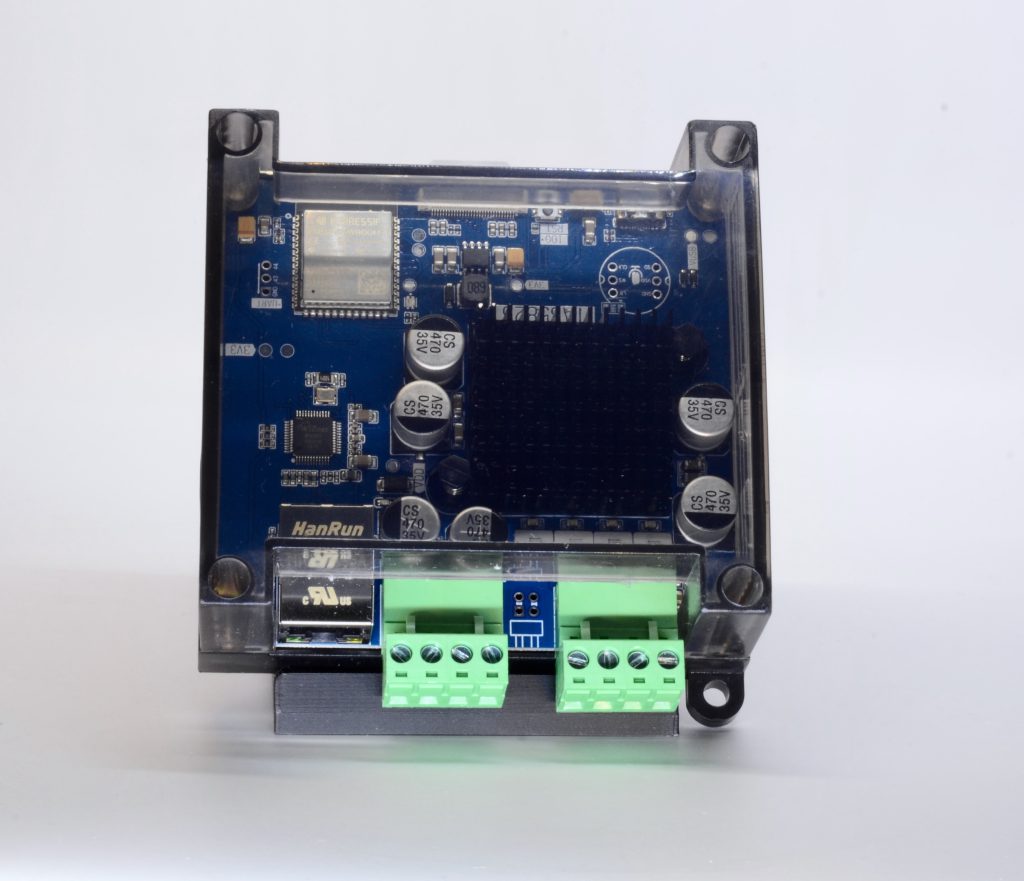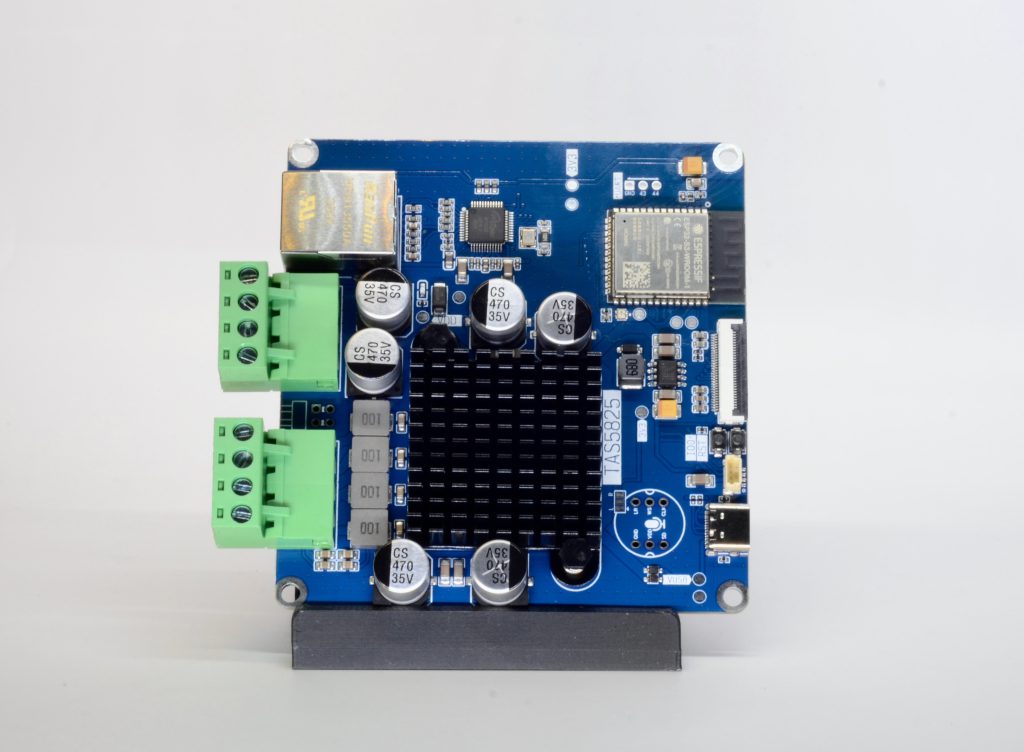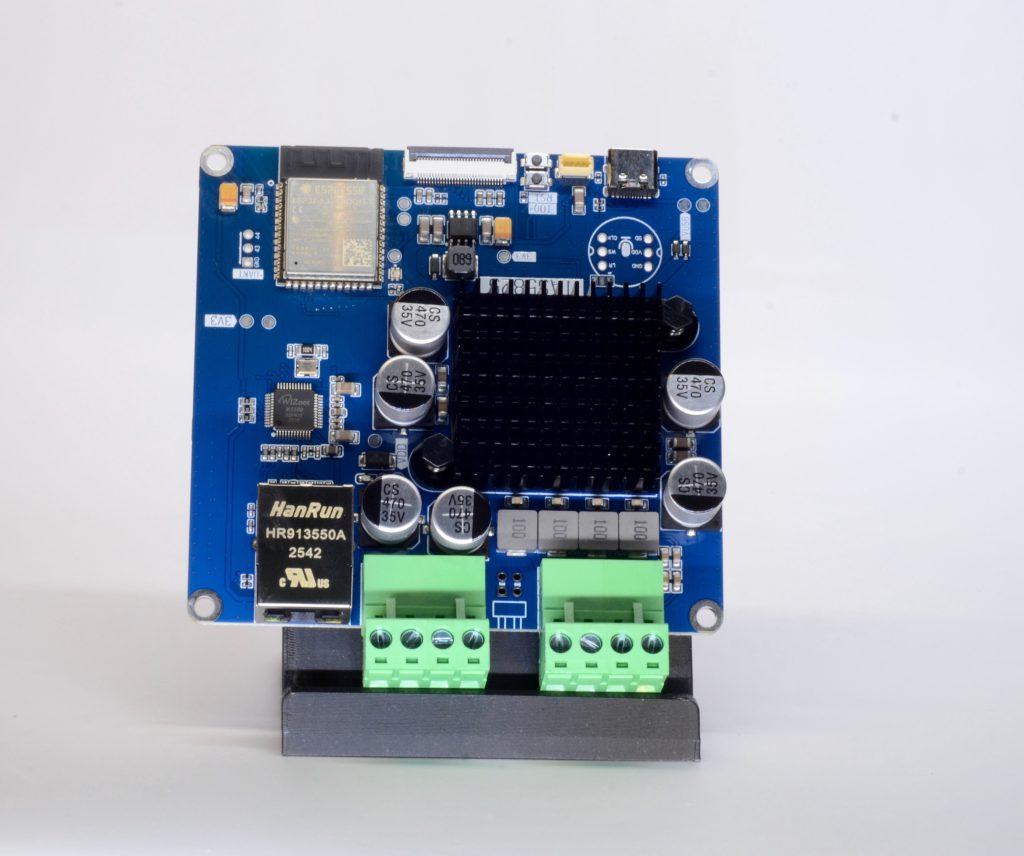
What is it?
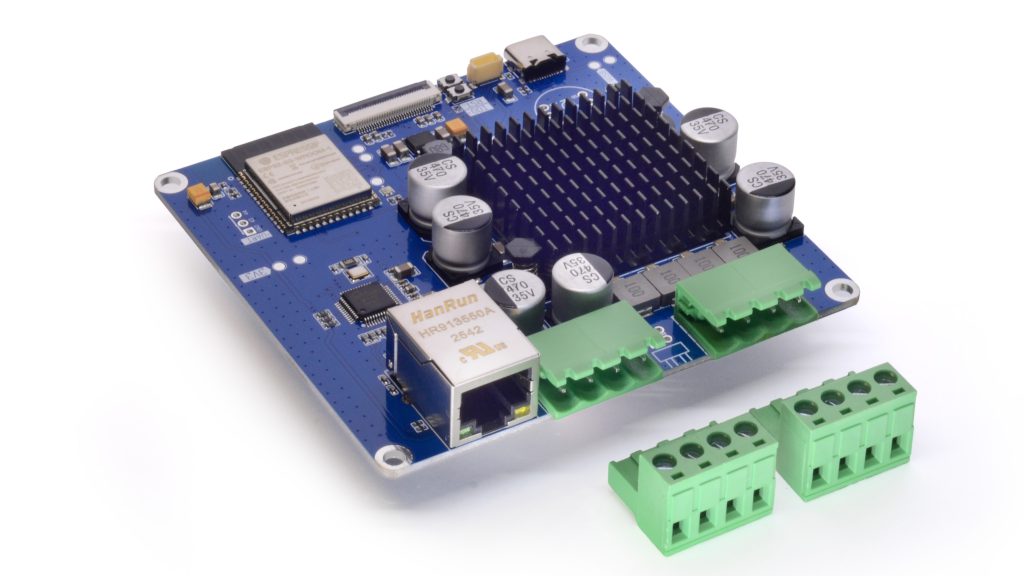
The Esparagus Audio Brick is a high-fidelity, modular audio endpoint built for makers, smart home integrators, and audio enthusiasts. It combines an ESP32 core, the TAS5825M DAC/amp, and robust connectivity (Ethernet/WiFi) into a DIN-rail mountable board that supports stereo, mono, bi-amp, or subwoofer configurations. With over-the-air updates, full DSP control, and an open software stack, it bridges the gap between DIY audio and professional installations.
Crowd Supply
Our Crowd Supply campaign is live! Please consider backing this project to make this product go live.
Use cases
Esparagus Audio Brick is a flexible, open-source audio platform designed to fit into both smart homes and custom audio projects.
- Smart Home Audio & TTS
Integrates with Home Assistant and Music Assistant for high-quality audio playback and text-to-speech announcements. Perfect for notifications, voice alerts, and whole-home audio driven by your smart home automations. - Multi-Room Audio with Snapclient
Use the Esparagus Audio Brick as a Snapclient endpoint to create perfectly synchronized multi-room audio systems. Ideal for distributed music playback without proprietary lock-in. - Standalone Player with Squeezelite-ESP32
Run Squeezelite-ESP32 for a self-contained network audio player supporting Spotify Connect, AirPlay, and Logitech Media Server (LMS) — no external computer required. - Educational Projects & Teaching Platforms
A powerful tool for schools, universities, and technical education. Esparagus Audio Brick can be used to teach embedded systems, digital audio, networking, and open-source software, ranging from simple audio playback labs to advanced DSP, streaming, and real-time systems projects. - Research, Prototyping & Experimentation
Well-suited for rapid prototyping of audio devices, proofs-of-concept, and research projects involving DSP, low-latency streaming, wireless audio, or human-machine interaction. - A Foundation for Custom Products & DIY Builds
With all firmware and tooling fully open source, Louder-ESP32 is an ideal base for custom audio devices — whether you’re building a personal DIY project, a small production run, or a community-driven product.
Features
| Louder-Esparagus | Esparagus Audio Brick | |
| MCU | ESP32-WROVER-N8R8 | ESP32-S3-WROOM-N8R8 | ESP32-WROVER-N8R8 | ESP32-S3-WROOM-N8R8 |
| DAC | Stereo I2S DAC (TAS5805M) with built-in D-Class amp | Stereo I2S DAC (TAS5825M) with built-in D-Class amp |
| Output (4Ω, 1% THD+N) | 2x 32W | 2x 45W |
| Output (8Ω, 1% THD+N) | 2x 23W | 2x 30W |
| Output (Bridge, 4Ω, 1% THD+N) | 1x 45W | 1x 53W |
| Flash/PSRAM | 8MB/8MB | 8MB/8MB |
| Connectivity | WiFi + BT4.2 + BLE + Ethernet | WiFi + BT4.2 + BLE + Ethernet |
⚠️Louder boards will connect to passive speakers; you can’t use headphones or an external amp
💡Need to connect an external amp? Check out HiFi-ESP32 and Amped-ESP32
💡Don’t need DSP capabilities? Check out Loud-ESP32
Optional Peripherals
- 0.96″, 128 x 64 px OLED Screen
- WS2812B RGB LED
- W5500 Ethernet
Other
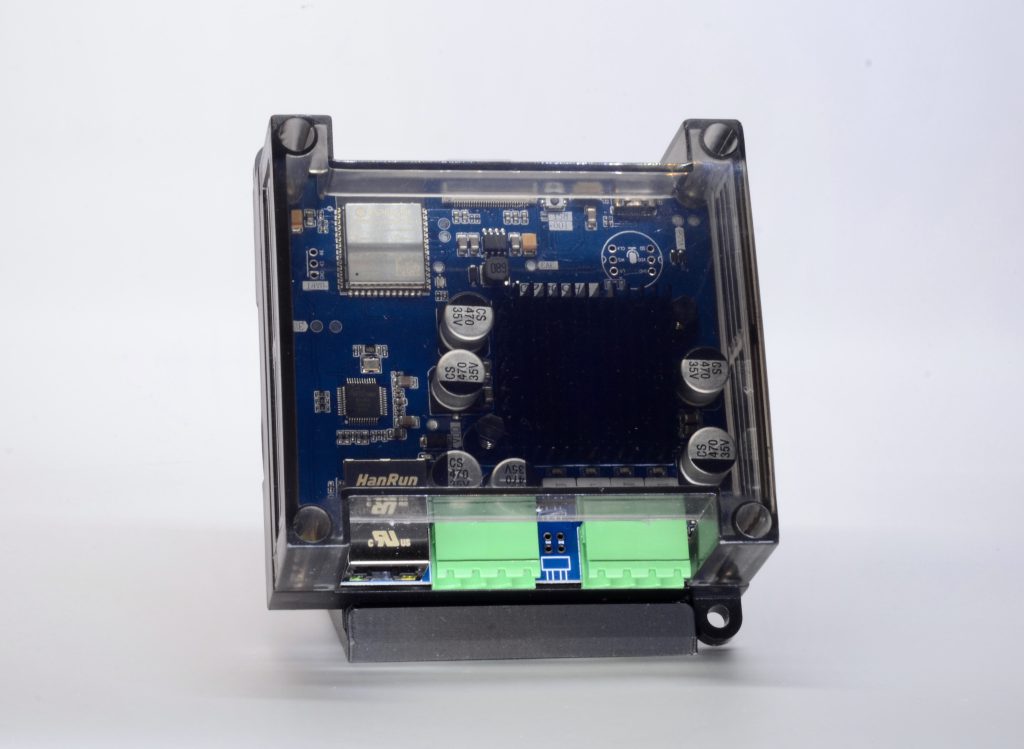
- 90 x 90 x 40mm DIN-rail mountable case
- Plug-in connector pairs for input/output/power, to make installation and replacement easier.
- Improved thermal design for enclosed spaces.
Onboard PSRAM
Audio streaming requires proper buffering to work, even with the ESP32’s 500K of RAM; it is a challenging task. For that reason, all Louder-ESP32 board versions have an 8 MB PSRAM chip onboard, connected via a high-speed interface.
Use Cases
- Retrofitting legacy or passive speakers: give old speakers streaming, multiroom, and smart home ability without replacing them.
- Whole-house or multi-zone audio installs: DIN-rail mounting & modular Bricks let you distribute clean, manageable audio per room or zone.
- Commercial or semi-industrial environments: clean wiring, reliable connectors, and ease of replacement make maintenance and scaling feasible.
- Enthusiast setups: bi-amp, subwoofer support, and 15-band EQ let you fine-tune the system to your audio gear.
Comparison to Earlier Models
- Moves from TAS5805M to TAS5825M for better efficiency/power/features.
- Adds mechanical and thermal improvements (DIN-rail support, better heat dissipation).
- Improved connector design for maintenance & swap-out.
- Focused on scalability: multi-unit, whole-home use-cases rather than single standalone speaker boxes.
Firmware
- Home Assistant
Start from the web-installer, as soon as you configure WiFi, the boards will be discovered by the ESPHome add-in automatically. Dedicated configs can be found in the documentation for simple and stable media-player, experimental sendspin protocol, and experimental snapclient component - Squeezelite-ESP32
Flash directly from your browser using the web-installer, configure WiFi using Hotspot (default password: squeezelite). Don’t forget to exit Recovery mode when configured. - Snapclient
Flash directly from your browser using the web-installer, as soon as you configure the WiFi board, it will discover the snapserver automatically - Snaplient (edge)
The developer’s version of the snapclient is less stable and more feature-rich for those who cannot wait for new features to be released. Installed via web-installer, similar to standard snapclient - Your own software
Use Arduino IDE or Platformio IDE and the provided software samples
Documentation
Both software and hardware are fully open-sourced and can be found on the project’s GitHub. You can follow the project updates at Hackaday
Video overview
Where to Learn More / Get Involved
- Driver repos on GitHub
- Documentation & schematics on Github
- Crowd Supply campaign pre-launch
- Community discussions (Discord / Hackaday)
Where to buy
You may support our work by backing this project on Crowd Supply ($59 MRSP).
As soon as the campaign is finished and all backer orders fulfilled, Audio Brick will become available through Tindie as well
Sponsorship & Community Support
If you’re working on an open-source project, an educational initiative, or any pro-bono/volunteer effort, feel free to reach out for sponsorship details. I’ll do my best to provide discounts or even free boards.
Custom Design & Consultation
If you’re interested in a custom design based on or inspired by my boards, I also offer contract design work and consultation when needed.
In the press
Will This Make My Smart Speakers Smell Funny? – Hackster.io
An Audio Brick For Your Smart Home – Hackaday
Esparagus Audio Brick ESP32-based DIN-rail 65W Hi-Fi amplifier supports Home Assistant and Squeezelite (Crowdfunding) – CNX Software