What is it?
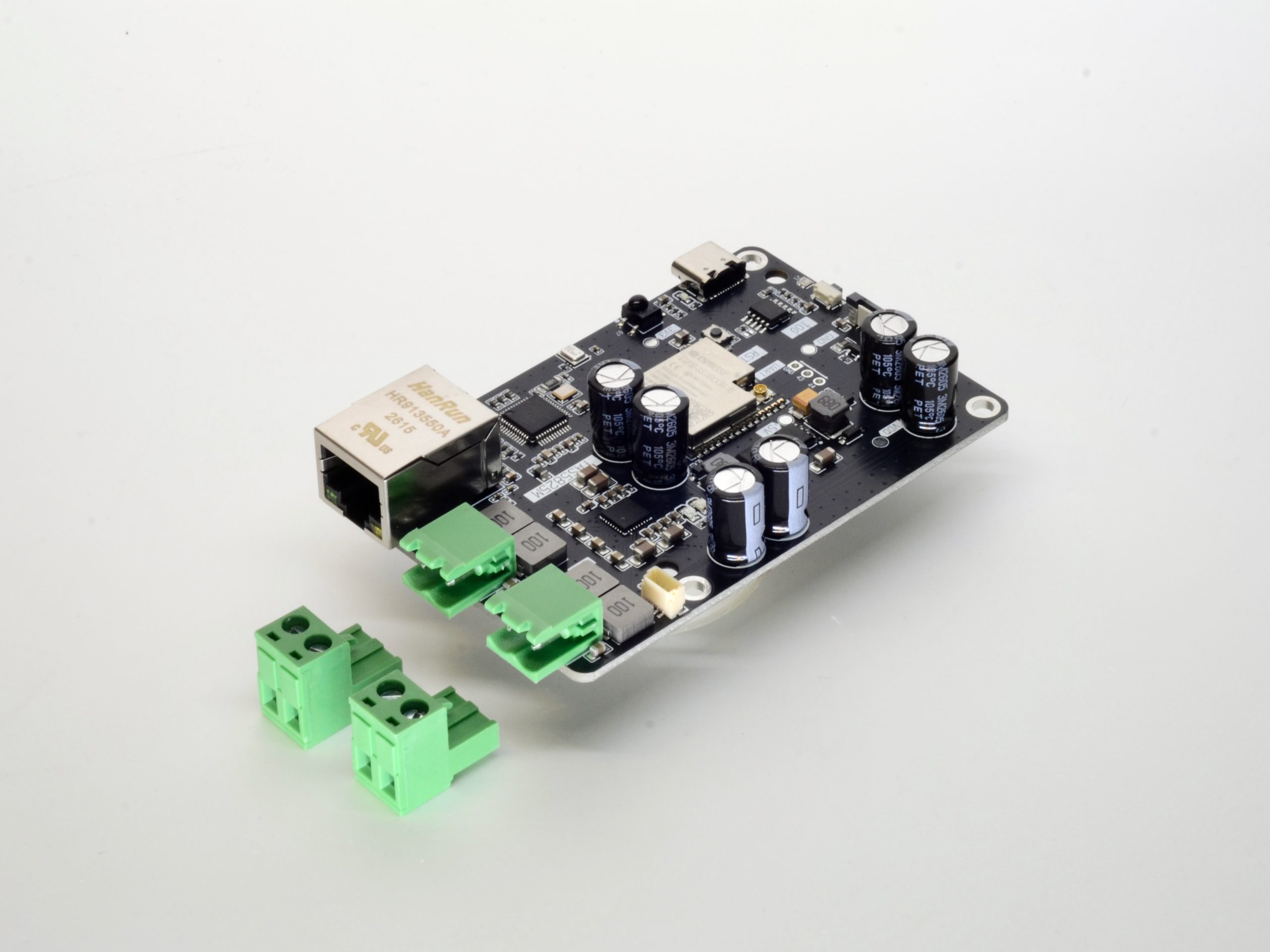
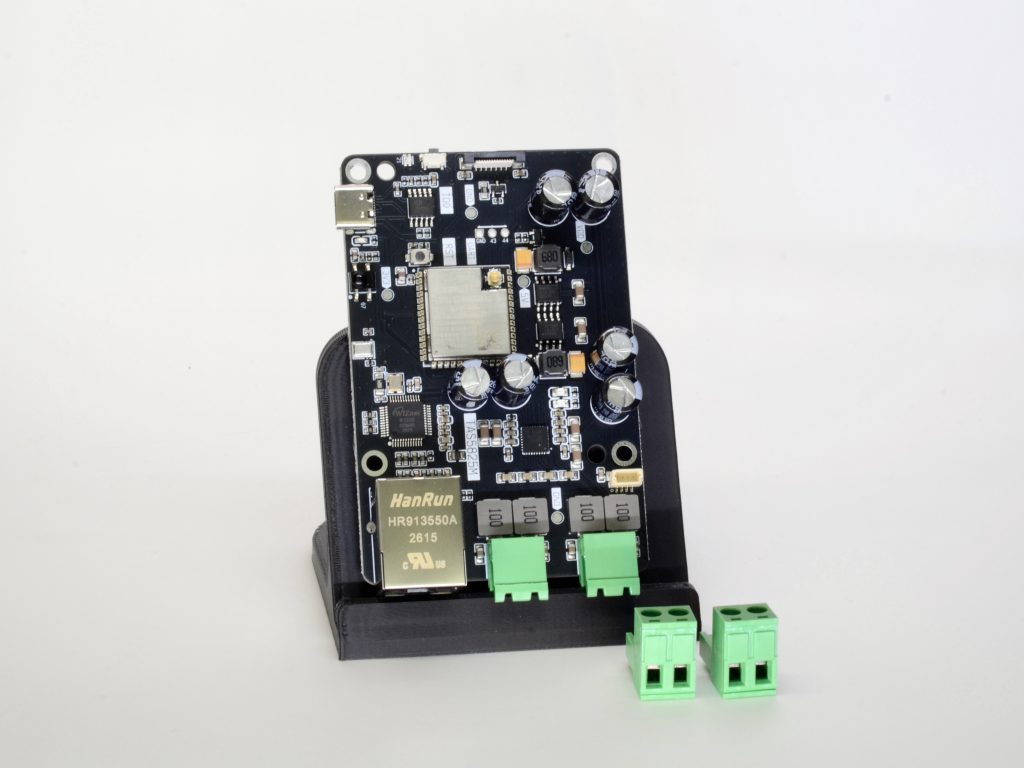
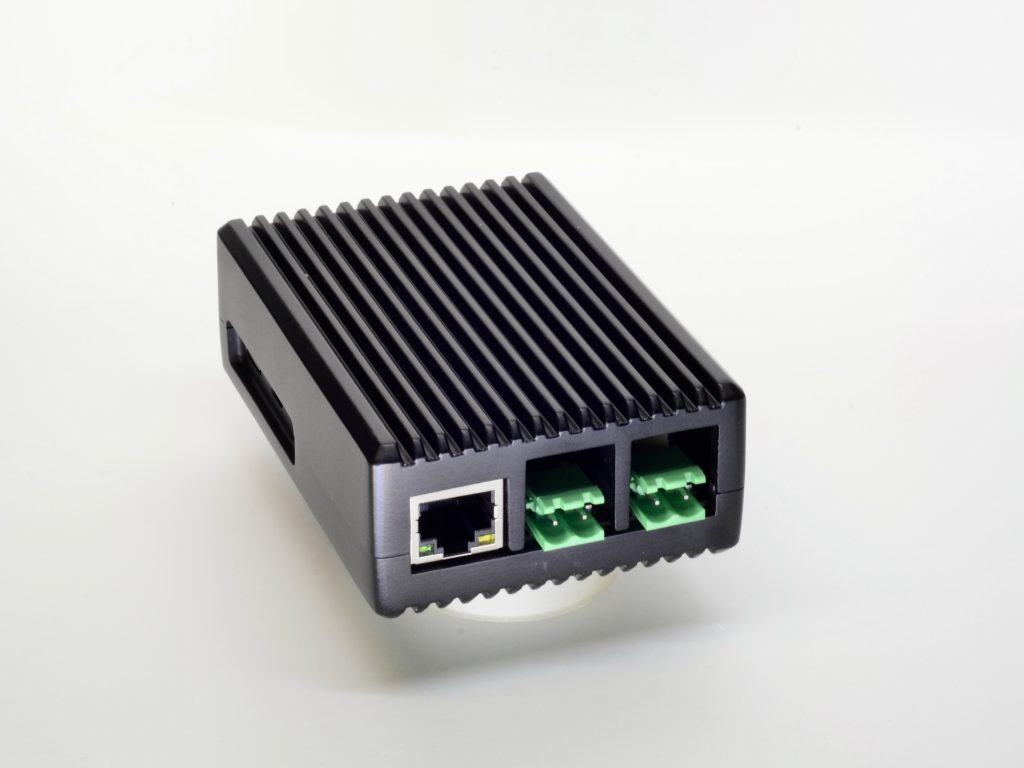
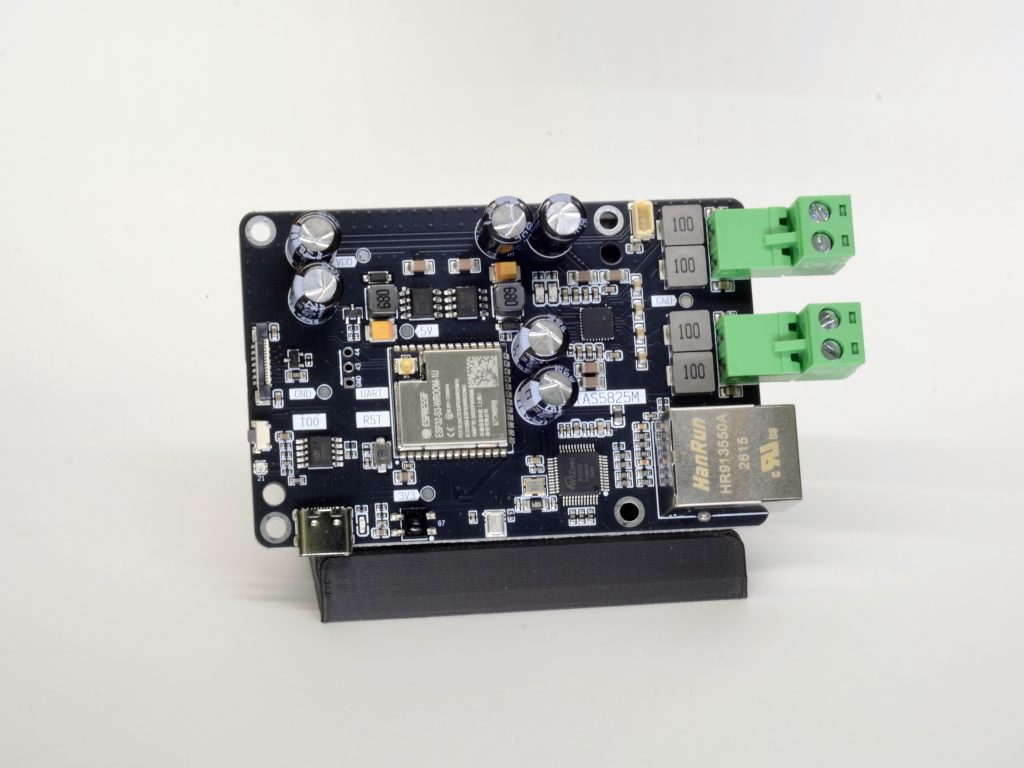
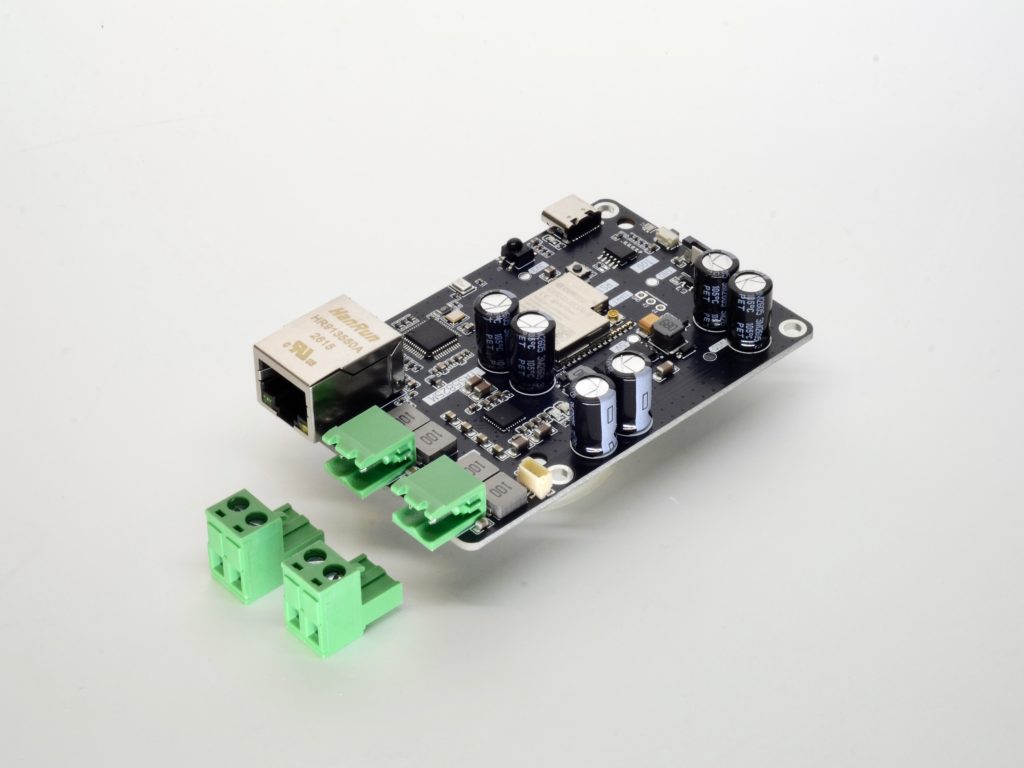
Louder-ESP32-Pro is a feature-packed version of the Louder-ESP32-Plus, which hosts most of the optional extras as standard, adds support for color TFT screens, and, perhaps most importantly, adds an industrial-grade heat release solution for reliable heavy-duty operation.
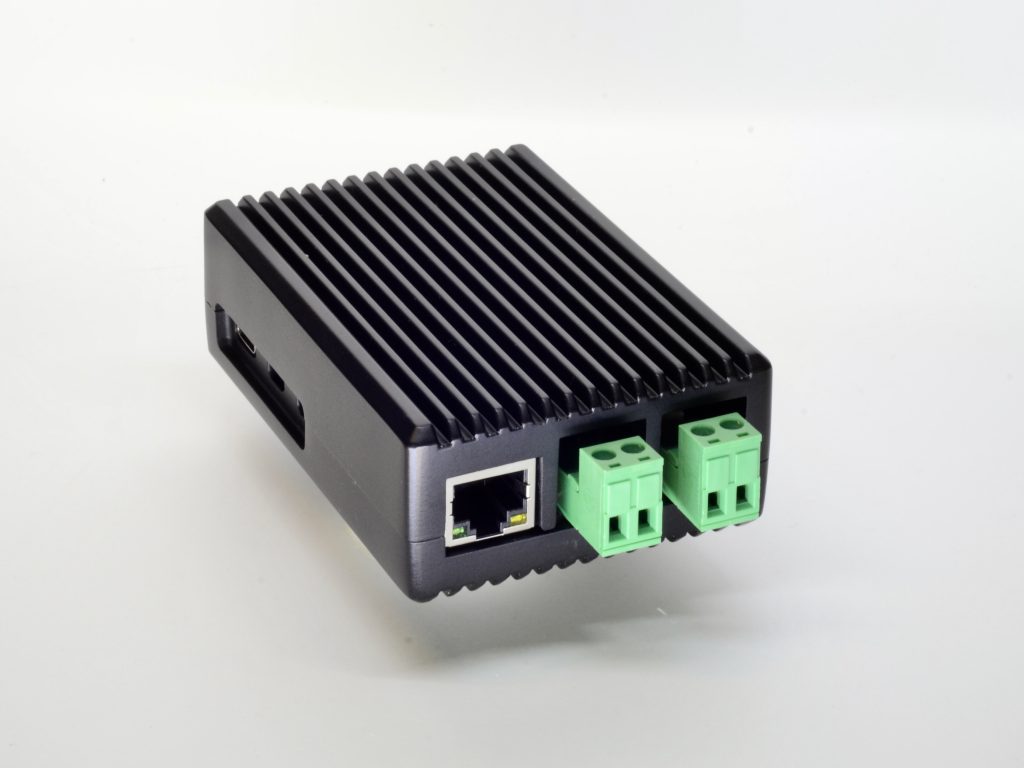
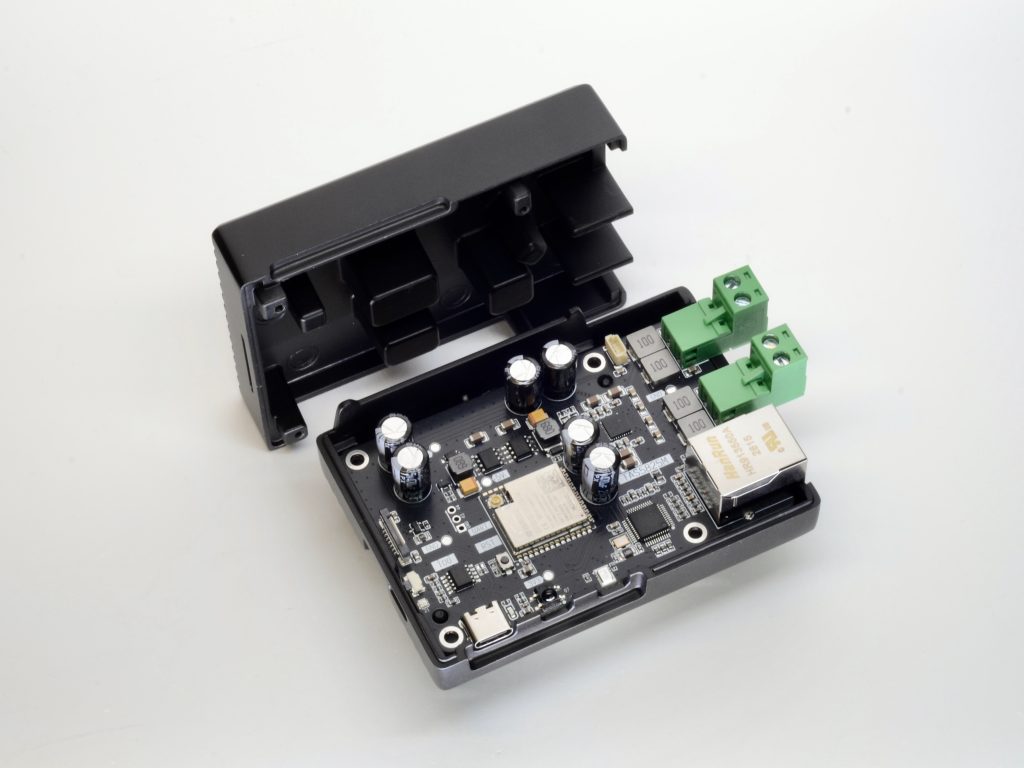
It comes in Raspberry Pi 5 shape with the most important component placed to follow the original heat release pattern. This allows the use of Raspberry Pi aluminum radiators, including those with soft-controlled fan connectors, that can be driven through Louder-ESP32-Pro software when operating in hot conditions.
Louder-ESP32-Pro is equipped with a high-quality TAS5825M DAC with powerful DSP features, allowing audio tuning to turn your speakers into high-quality audio streamers, big or small likewise. Onboard ESP32-S3 with 8MB PSRAM is there to ensure enough horsepower for solid streaming capabilities.
It is designed to be used with USB-PD-enabled power sources, so powering it is as easy as plugging in a standard laptop power charger. For maximum power, a 65W power source is recommended, but it would also happily accept quick-charge phone power adapters, and even standard USB-C power adapters, with limited output power
Use cases
The main use case for the Louder-ESP32-Pro is Home Assistant and Music Assistant integration via ESPHome, including voice-assist support using the onboard MEMS microphone and multi-color feedback LED. But being an open source solution, it can serve your other needs as well
- Multi-Room Audio with Snapclient
Use Louder-ESP32-Pro as a Snapclient endpoint to create perfectly synchronized multi-room audio systems. Ideal for distributed music playback without proprietary lock-in. - Standalone Player with Squeezelite-ESP32
Run Squeezelite-ESP32 for a self-contained network audio player supporting Spotify Connect, AirPlay, and Logitech Media Server (LMS) — no external computer required. - Educational Projects & Teaching Platforms
A powerful tool for technical education. Louder-ESP32-pro can be used to teach embedded systems, digital audio, networking, and open-source software. - Research, Prototyping & Experimentation
Well-suited for rapid prototyping of audio devices, proofs-of-concept, and research projects involving DSP, low-latency streaming, wireless audio, or human-machine interaction. - A Foundation for Custom Products & DIY Builds
With all firmware and tooling fully open source, Louder-ESP32-pro is a base for custom audio devices — whether you’re building a personal DIY project, a small production run, or a community-driven product.
Features
| Louder-ESP-Pro | Louder-ESP32 | Louder-ESP32-Plus | |
| MCU | ESP32-S3-WROOM-N8R8 | ESP32-WROVER-N8R8 | ESP32-S3-WROOM-N8R8 | ESP32-WROVER-N8R8 | ESP32-S3-WROOM-N8R8 |
| DAC | Stereo I2S DAC (TAS5825M) with built-in D-Class amp | Stereo I2S DAC (TAS5805M) with built-in D-Class amp | Stereo I2S DAC (TAS5825M) with built-in D-Class amp |
| Output (4Ω, 1% THD+N) | 2x 45W | 2x 32W | 2x 45W |
| Output (8Ω, 1% THD+N) | 2x 30W | 2x 23W | 2x 30W |
| Output (Bridge, 4Ω, 1% THD+N) | 1x 53W | 1x 45W | 1x 53W |
| Flash/PSRAM | 8MB/8MB | 8MB/8MB | 8MB/8MB |
| Connectivity | WiFi + BLE | WiFi + BT4.2 + BLE + Ethernet | WiFi + BT4.2 + BLE + Ethernet |
| Ethernet | ✅ | optional | optional |
| IR reader | ✅ | ✅ | ✅ |
| Mic | ✅ | optional | optional |
| RGB LED | ✅ | optional | optional |
| Screen connector | TFT, 2.4″, 320x240px | OLED, 0.96″, 128x64px | OLED, 0.96″, 128x64px |
| Power requirement | Generic power adapter 5..28V | Generic power adapter 5..28V | Generic power adapter 5..28V |
⚠️Louder boards will connect to passive speakers; you can’t use headphones or an external amp
💡Need to connect an external amp? Check out HiFi-ESP32 and Amped-ESP32
💡Don’t need DSP capabilities? Check out Loud-ESP32
💡Looking for a more feature-packed version? Check out Louder Esparagus
Use with the Raspberry case
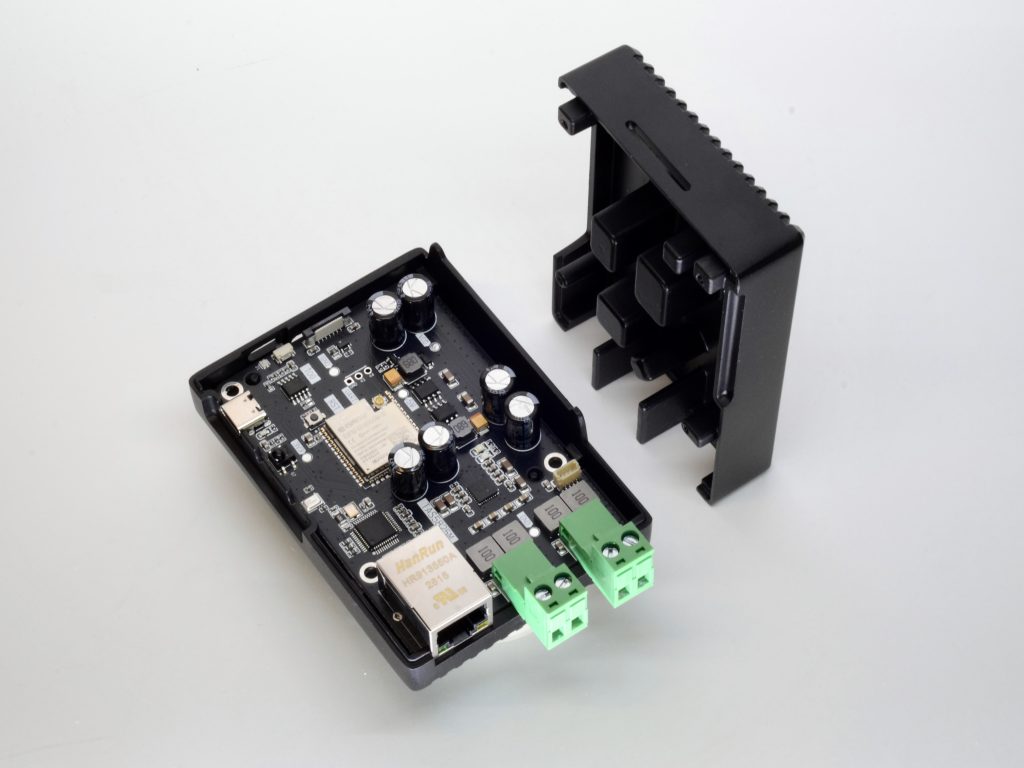
Louder-ESP32-Pro boards are mechanically compatible with aluminum cases for Raspberry Pi 5. The most important components that release heat under heavy operation would be covered by the case heat release pads. On top of that, the board allows connecting a 4-pin fan with speed control and RPM readout, so it can be engaged only when needed.
Firmware
- Home Assistant
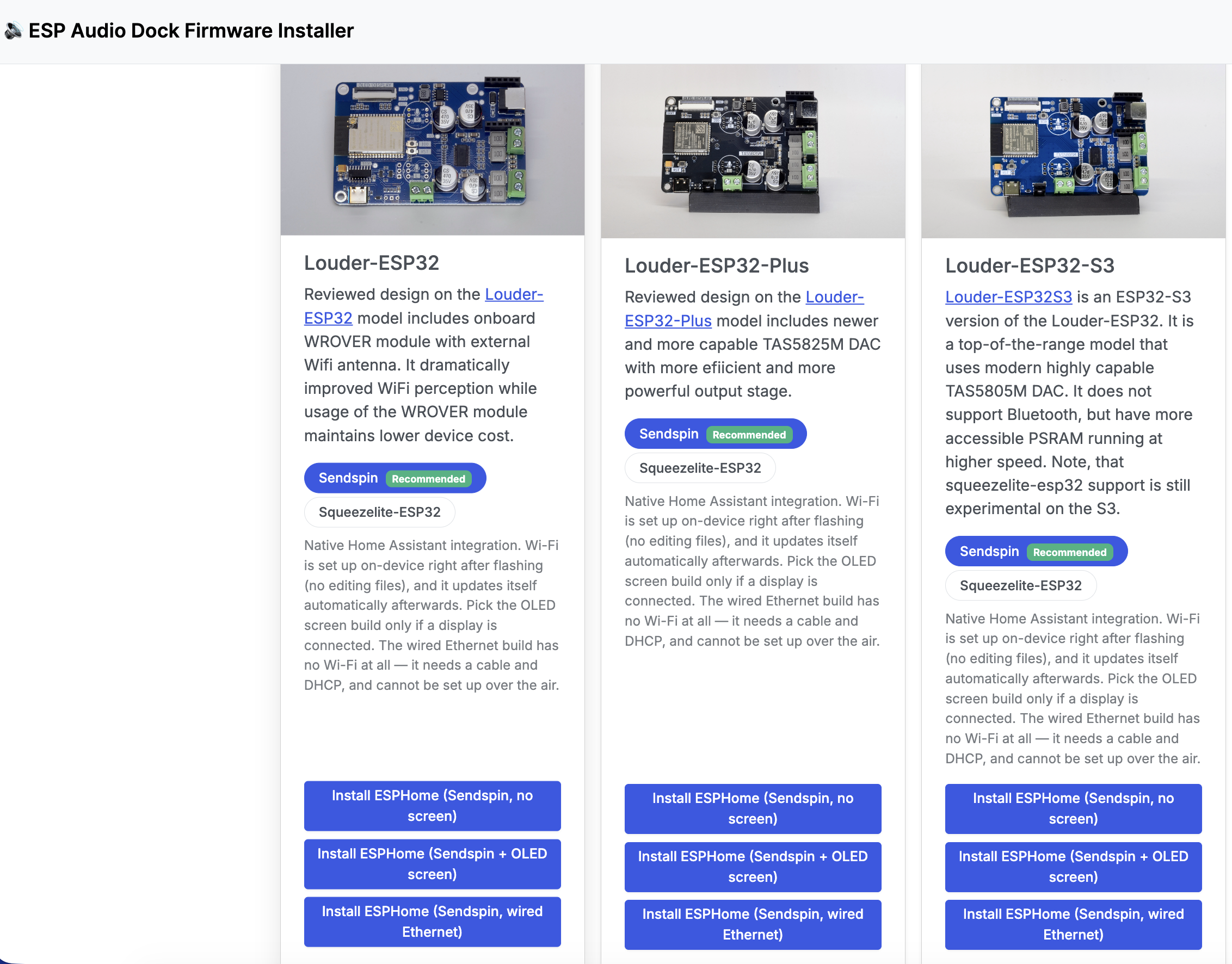
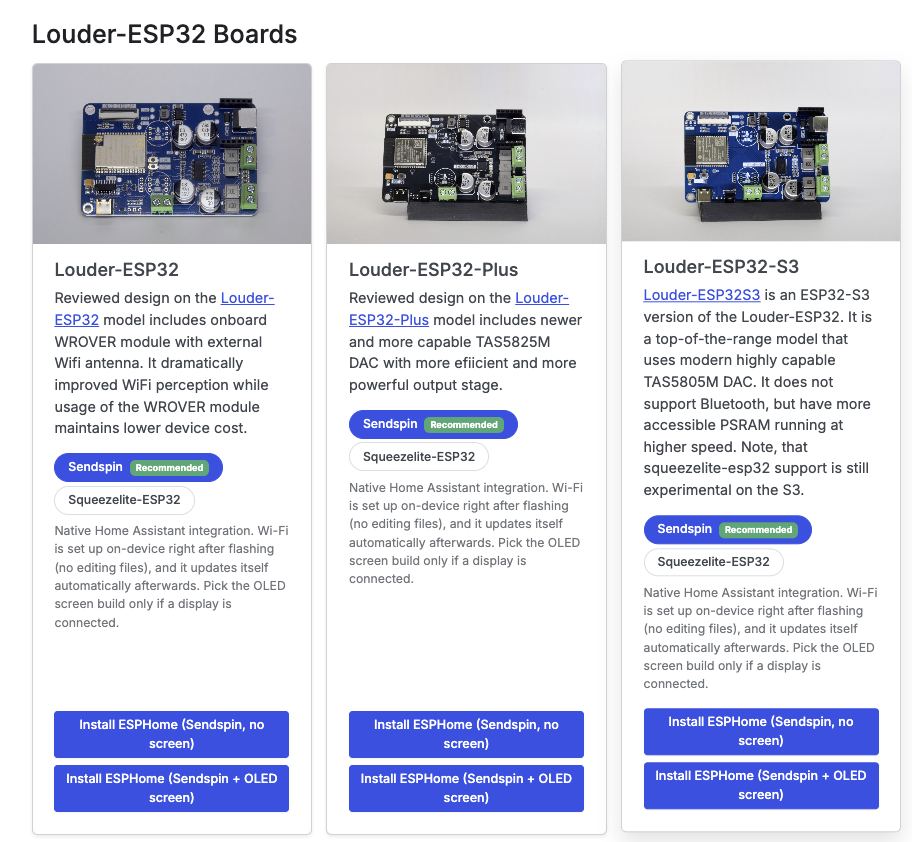
Start from the web-installer, as soon as you configure WiFi, the boards will be discovered by the ESPHome add-in automatically. Dedicated configs can be found in the documentation for simple and stable media-player, experimental sendspin protocol, and experimental snapclient component - AirPlay 1 & 2 with Sendspin and Bluetooth. Native, actively developed AirPlay 1 & 2 firmware (rbouteiller/airplay-esp32) with PTP multi-room sync, an experimental Sendspin renderer, and Bluetooth A2DP on the ESP32 revision. Flash straight from your browser with the web-installer — no toolchain needed. See AirPlay 2 support below for details.
- Squeezelite-ESP32*
Flash directly from your browser using the web-installer (work in progress), configure WiFi using Hotspot (default password: squeezelite). Don’t forget to exit Recovery mode when configured. - Snapclient*
Flash directly from your browser using the web-installer (work in progress), as soon as you configure the WiFi board, it will discover the snapserver automatically. The less stable and more feature-rich version for those who cannot wait for new features to be released, can be installed via the edge version web-installer - Your own software
Use Arduino IDE or Platformio IDE and the provided software samples
* Squeeezelite and snapclient have limited support of the ESP32-S3 at the moment. Issues are expected.
AirPlay 1 & 2
Squeezelite’s built-in AirPlay is a first-generation implementation. rbouteiller/airplay-esp32 is a standalone, open-source AirPlay 1 & 2 receiver for the ESP32 family — actively developed, with great work done by the community despite the lack of help from Apple.
It now supports HiFi-ESP32, Loud-ESP32, Louder-ESP32, and Louder-ESP32-Plus, and Amped-ESP32 out of the box, on both the ‘classic’ ESP32 and ESP32-S3 revisions, flashable straight from a browser — no toolchain required. Current features:
- AirPlay 1 & 2 — appears natively in Control Center and any AirPlay app, with PTP-based multi-room sync
- Sendspin (experimental) — an open multi-room protocol renderer sharing the same output path, DSP, and volume control as AirPlay
- Bluetooth A2DP on the classic ESP32 revision — phones and laptops can stream directly whenever AirPlay is idle (the ESP32-S3 has no Bluetooth Classic radio)
- On-device display — the optional OLED add-on, or the Louder-ESP32-Pro’s color TFT, shows track metadata and progress for AirPlay, Bluetooth, and Sendspin alike
- USB audio (UAC) — the ESP32-S3 revision can be built as a USB sound card for a connected computer, sharing the same DAC path
- Full DSP control on Louder-ESP32/Louder-ESP32-Plus — the TAS5805M/TAS5825M’s on-chip EQ is fully exposed: 15 cascaded biquad sections per channel, each an arbitrary peaking filter, shelf, high/low pass, band pass, notch, phase shift, or raw coefficients, plus a crossover builder (and, on the TAS5825M, full PurePath Console 3 tuning replay)
TAS58xx DSP: full parametric EQ and crossover control
AirPlay 2 support above isn’t just playback — it exposes the TAS5805M’s on-chip DSP in full from the board’s web UI:
- 15 biquad (BQ) filters per channel, usable as a full 15-band parametric equalizer
- Bi-amp filter configuration for 2-way speaker systems — split the signal between tweeter and woofer with independent filter chains per amplifier
- Low-pass filtering for subwoofer tuning and bass enhancement
- Generic filters for speaker and room equalization — peaking filters, shelf filters, and EQ sections with a configurable Q-factor, applied per channel individually or to both at once


Work in progress: REW (Room EQ Wizard) integration, to drive automatic room-correction algorithms directly from a measured response.
Using with Home Assistant
The Louder-ESP32-Pro was created specifically to be used with Home Assistant via ESPHome integration. For both boards, rich configs were pre-created with hardware configuration for common use cases. These include
- Sendspin media player – new experimental protocol for multi-room sync with media controls and extra features
- Voice assist config, allowing local voice-controlled assist and automation
- Standard and stable version of the media_player component for simple and robust media playback and TTS announcements with ducking effect
- An experimental snapclient component that allows near-perfect multi-room sync and seamless integration with Music Assistant
Configurations are being actively maintained and upgraded, new experimental components added for you to test and enjoy
Documentation
Both software and hardware are fully open-sourced and can be found on the project’s GitHub. You can follow the project updates at Hackaday
Where to buy
You may support our work by ordering this product at Tindie and Elecrow
Sponsorship & Community Support
If you’re working on an open-source project, an educational initiative, or any pro-bono/volunteer effort, feel free to reach out for sponsorship details. I’ll do my best to provide discounts or even free boards.
Custom Design & Consultation
If you’re interested in a custom design based on or inspired by my boards, I also offer contract design work and consultation when needed.
Related posts