
A batch of Amped-ESP32-Plus boards left the assembly line with the wrong capacitors in the DAC output filter. If your board sounds muffled and quiet, this is almost certainly why. It doesn’t damage the board, your speakers or anything else, and the fix is removing two small parts. I’m writing to everyone who received a board from this batch personally, so you’ll hear from me directly with the options.
Which boards are affected
Only boards from one production batch, not all boards of these revisions:
- Amped-ESP32-Plus, rev D0 (ESP32), with the TPA3118 amp
- Amped-ESP32-Plus, rev E0 (ESP32-S3), with the TPA3118 amp
| Store | Shipped between |
|---|---|
| Tindie | 24 Oct 2026 – 1 Nov 2026 |
| Lectronz | 24 Oct 2026 – 1 Nov 2026 |
| Elecrow | 15 Oct 2026 – 1 Nov 2026 |
Boards shipped after 1 Nov 2026 were reworked and tested before shipping.
What you will notice
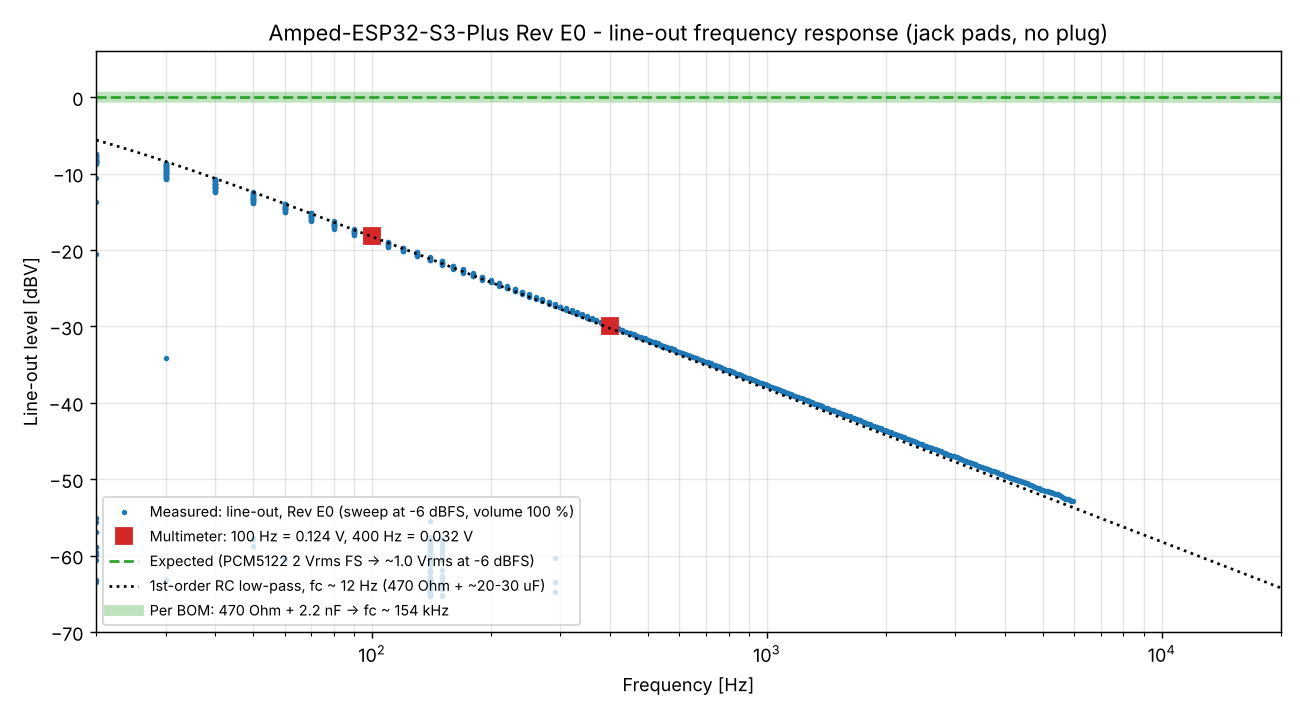
- The sound is muffled and lacks treble, as if heard through a wall, and it is much quieter than it should be.
- Below about 45% volume, the sound may cut out almost completely.
- Both the speaker output and the line-out/headphone output are affected, whatever firmware you run (ESPHome, Sendspin, Squeezelite) and whatever power supply you use.
Because the problem is in hardware, no firmware update, DSP or EQ setting can fix it.
What went wrong
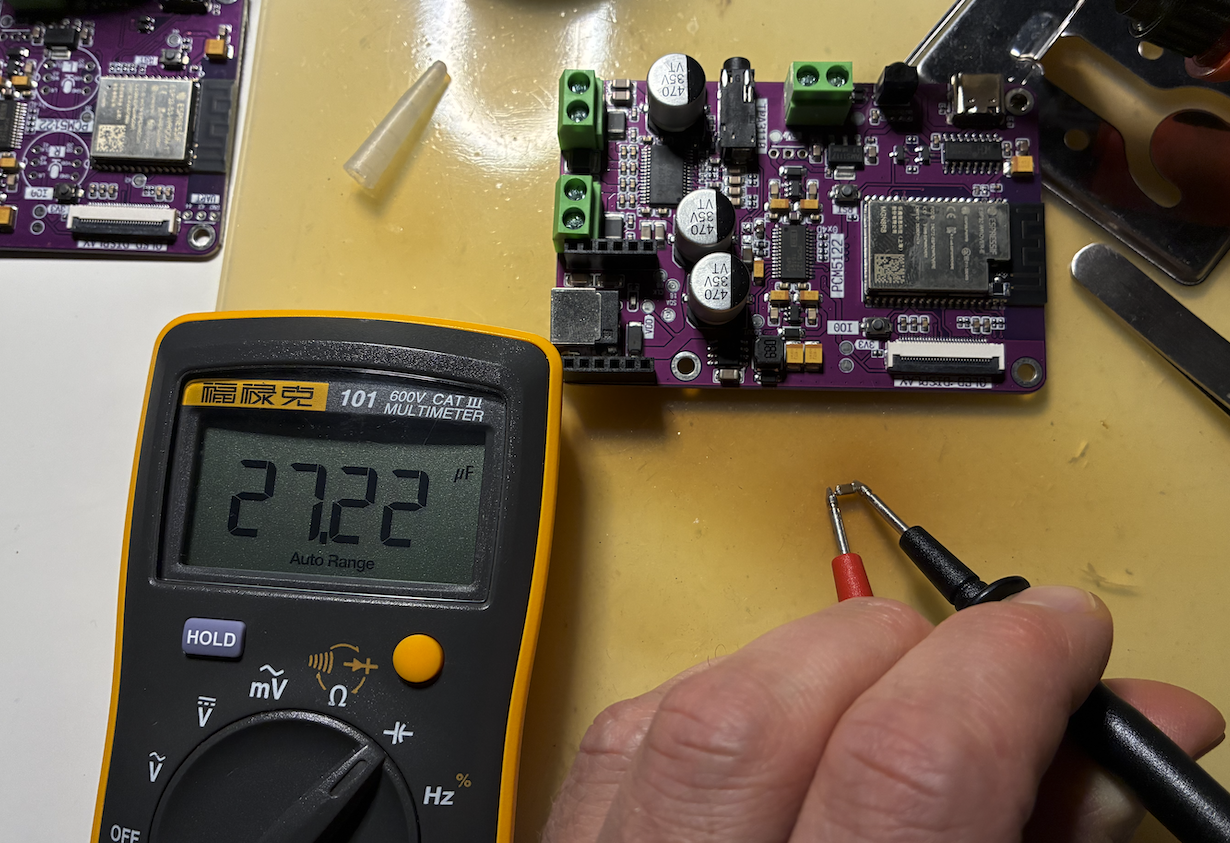
The PCM5122 DAC output passes through a small RC filter (470 Ω resistors with 2.2 nF capacitors at C65 and C73) that removes out-of-band noise above about 150 kHz. On this batch, the assembly house fitted 22–27 µF capacitors at those two positions instead. That moves the filter cutoff down to about 12–15 Hz, so the output falls steadily across the whole audible range. The published BOM is correct; it was a component mix-up during assembly, and the manufacturer has confirmed it.
How to check your board
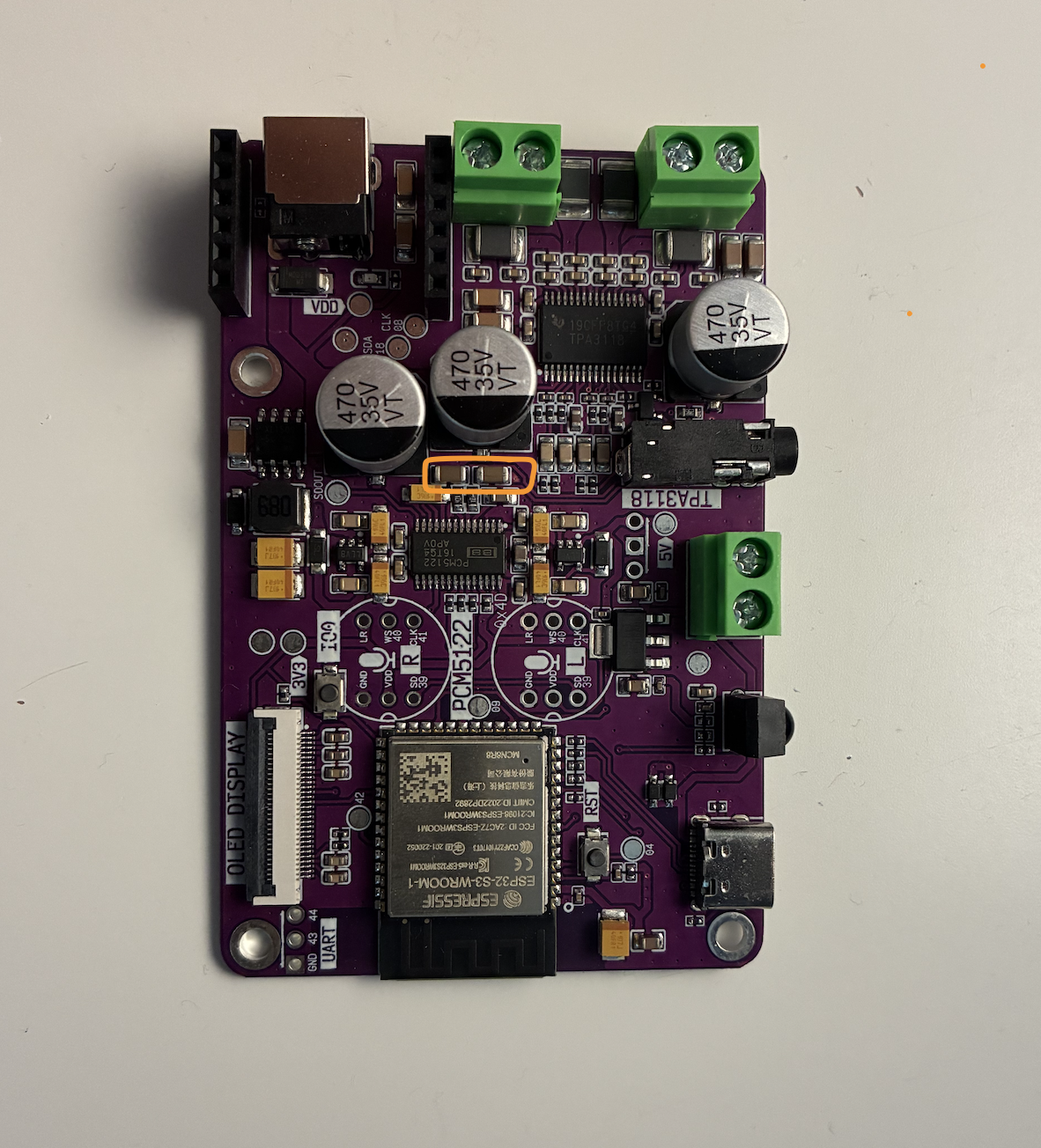
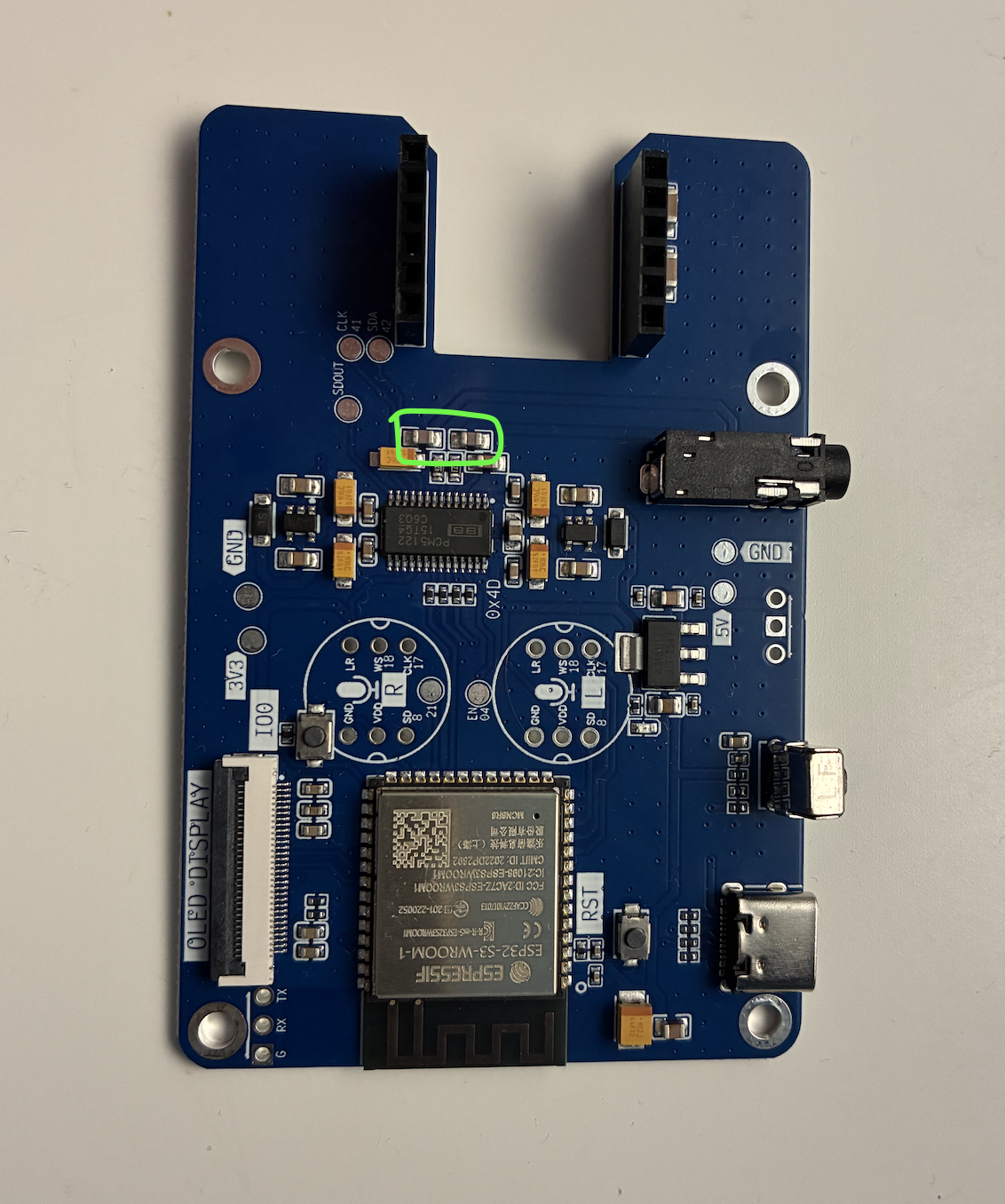
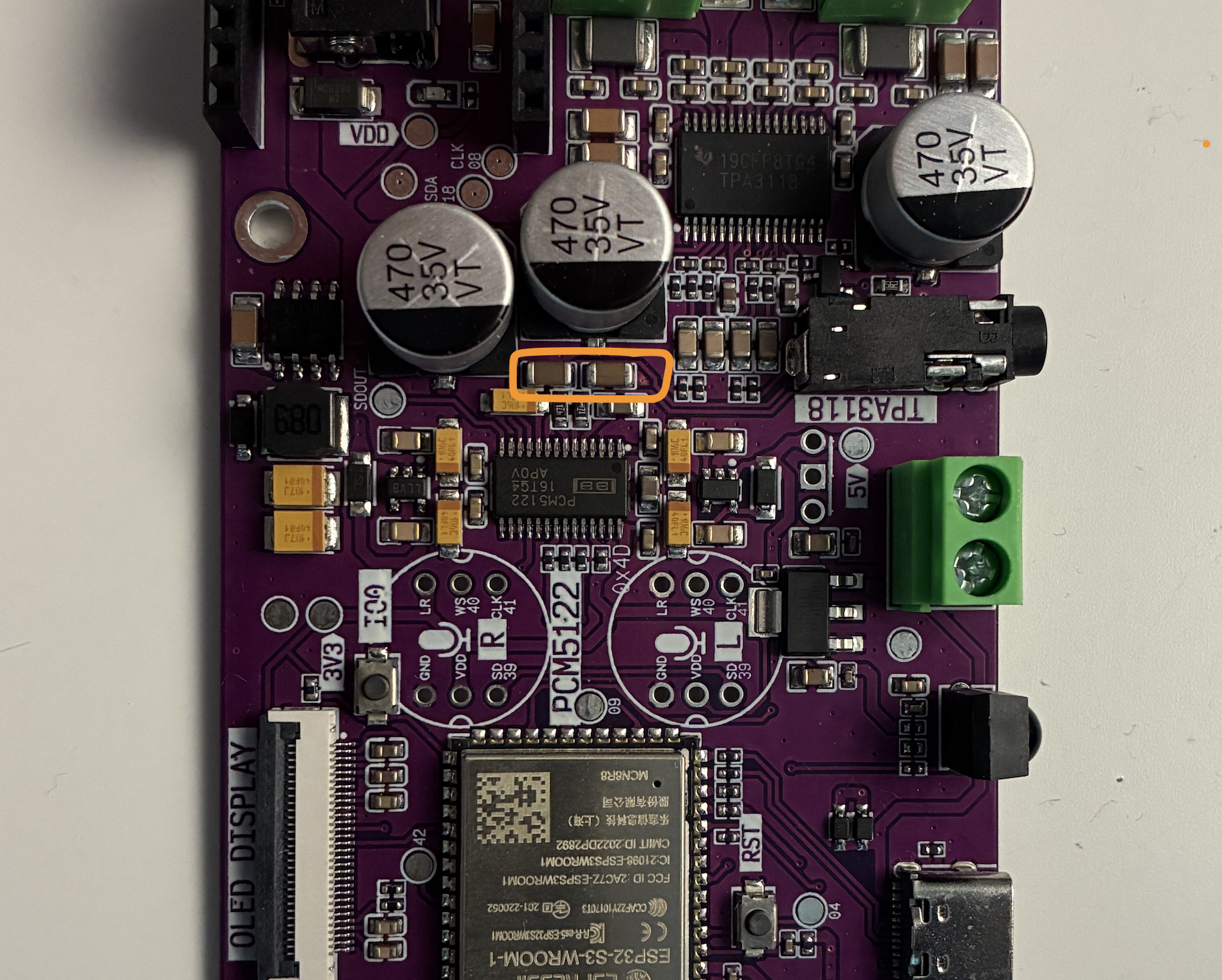
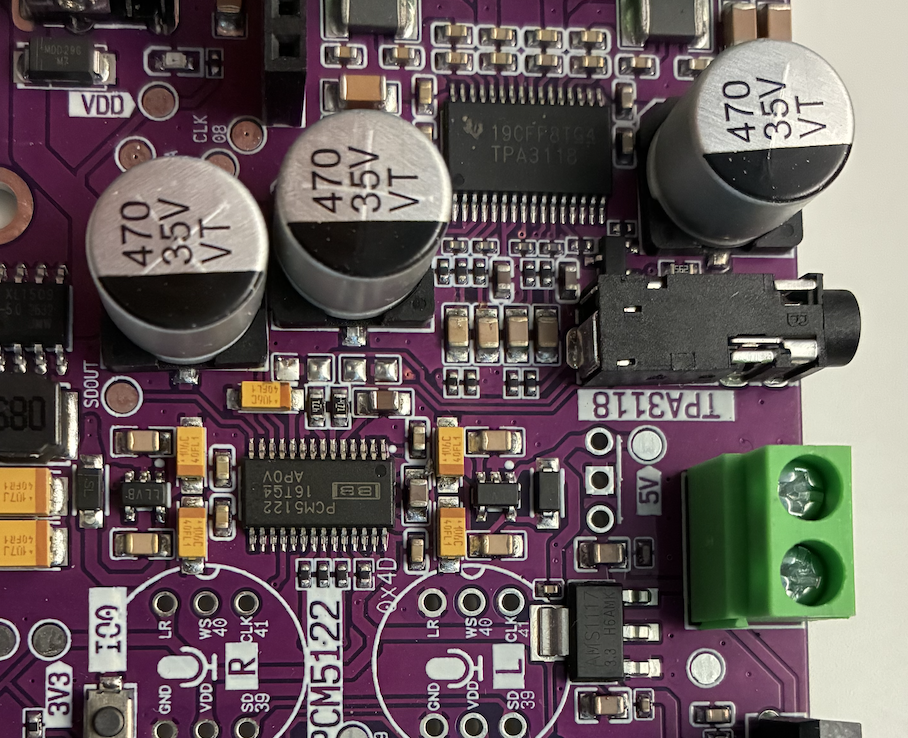
Look at C65 and C73 near the DAC. On an affected board they are visibly larger (1206 size) than the capacitors around them and overhang their pads. On a correct board they are small 0805 parts that match their neighbours.
What happens next
- If you bought a board from the affected batch, I will email you with the options, including a replacement board if you would rather not do the rework yourself.
- If you didn’t get a message, or you’re not sure whether your board is affected, please reach out through the store where you bought it, or contact me directly.
If you want to fix it yourself
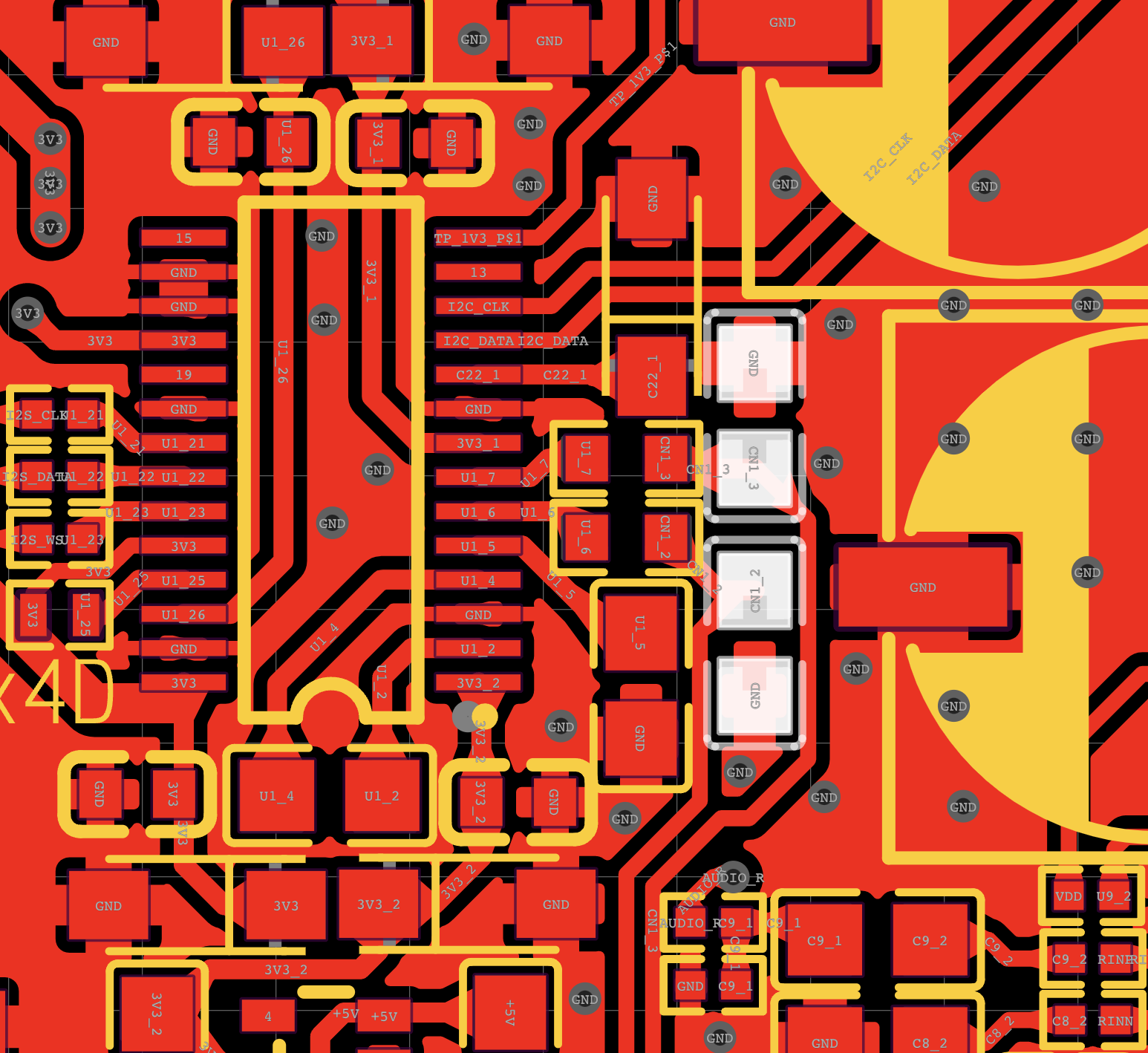
Remove C65 and C73. No replacement part is needed: the TPA3118 amp has its own input filter, so the board performs as intended without them.
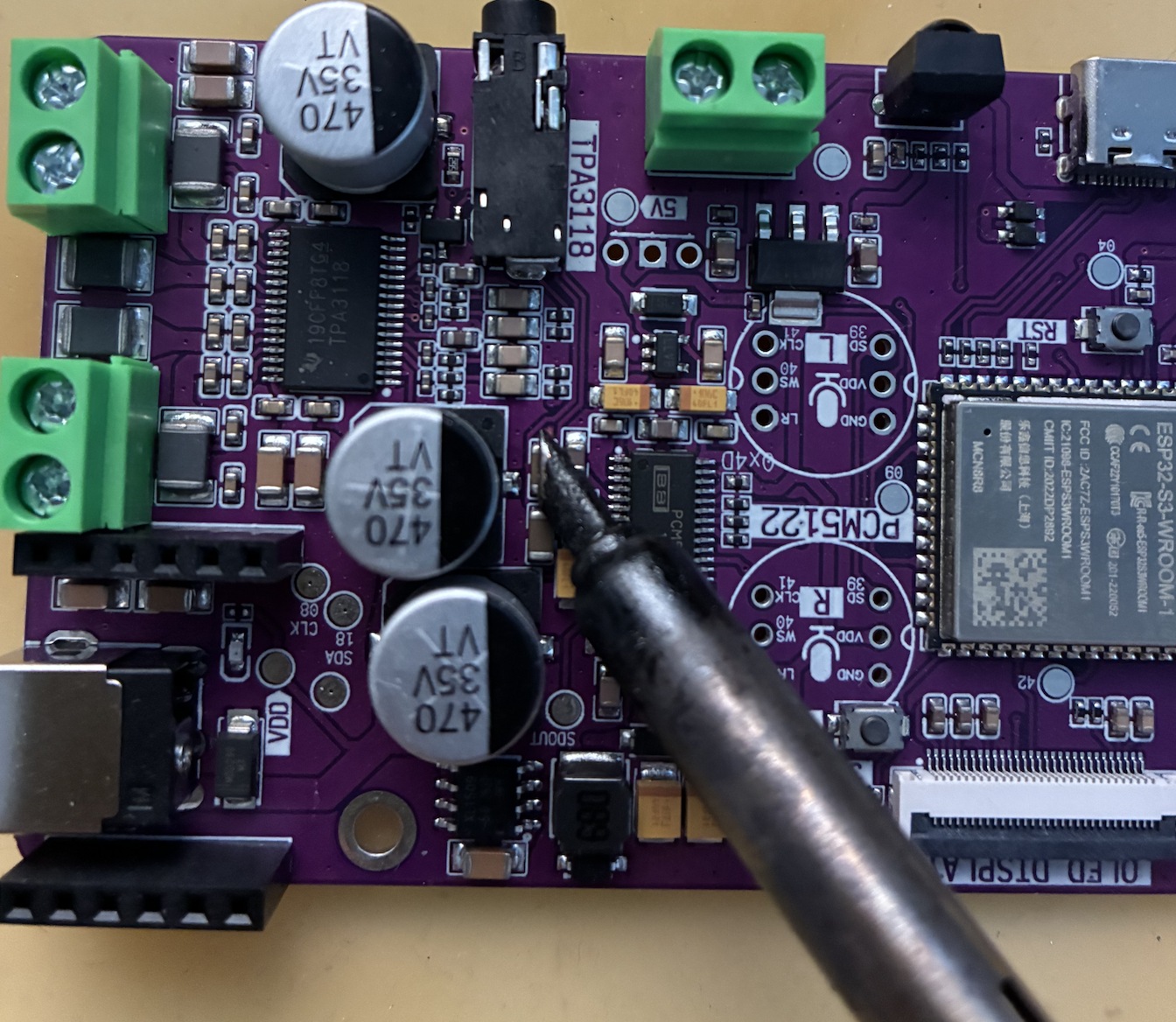
- Disconnect power and any connected speakers. Locate C65 and C73 near the PCM5122 DAC (U1).
- Remove both capacitors with hot tweezers or two soldering irons. You can also heat one side with an iron and gently lift or twist the capacitor off. Take care not to lift the pads or disturb neighbouring parts.
- Clean the pads and check under magnification that no solder bridges or leftover pieces remain.
- Power the board and play some music. The sound should now be clear, with full treble.
The full errata, with the frequency sweep and step-by-step photos, is on GitHub. The original report and investigation are in issue #204. Thanks to everyone who reported this and helped track it down, and sorry for the trouble.
Leave a Reply
You must be logged in to post a comment.